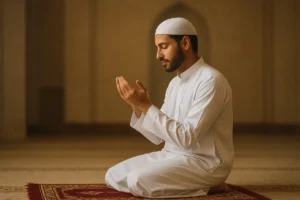

What Is Salah?: Salah, or prayer, is a fundamental act of worship ordained by Allah in a Muslim’s daily life. It is more than a ritual—it is a personal connection with Allah, a moment to express gratitude, and a source of inner peace. Before beginning Salah, performing ablution (wudu) cleanses both body and soul, preparing one for this sacred conversation. Five times a day, the call to prayer (adhan) invites Muslims to pause and turn towards Allah. Each prayer offers an opportunity to discipline the mind and heart, step away from daily distractions, and reflect on life’s true purpose. When performed as Allah commands, Salah brings deep serenity and spiritual harmony to the soul.
The Meaning and Essence of Salah
Salah, the Arabic word for prayer, is more than a daily act of worship. It is the living connection between a believer and Allah, a sacred conversation that nourishes the soul and strengthens faith. Every movement, every verse recited in Salah reminds Muslims of their purpose in life and the constant presence of their Creator.
Qur’an Reference: Surah Al-Baqarah, Verse 45
Salah is not just a form of devotion but a means of inner transformation. Through prayer, the believer expresses gratitude, seeks forgiveness, and renews spiritual energy. It is where the heart finds peace and the soul finds direction.
Qur’an Reference: Surah Ar-Ra’d, Verse 28
The Historical Roots of Prayer
Prayer as a Divine Command in All Faiths
Prayer did not begin with Islam. It is a timeless act of worship that has been commanded by Allah to all His prophets and their followers. From Adam to Abraham, Moses, and Jesus, all messengers were instructed to pray and call upon their Lord in submission and humility. Islam continues this divine tradition, affirming that Salah has always been an essential way to connect with the One True God.
Qur’an Reference: Surah Maryam, Verse 31
When Prophet Muhammad (peace be upon him) received the command of Salah during the miraculous Night Journey, it reaffirmed what all prophets before him had practiced. Salah became the daily anchor of faith, establishing a continuous link between humanity and its Creator.
Qur’an Reference: Surah Al-Isra, Verse 78
The Structure and Spiritual Flow of Salah
The Physical Movements and Their Meanings
Each posture in Salah carries deep spiritual meaning. Standing reflects humility before Allah, bowing symbolizes respect, and prostration represents total surrender. The physical rhythm of Salah is a reflection of the believer’s journey from self-awareness to divine closeness.
Qur’an Reference: Surah Al-Hajj, Verse 77
The Words, Intentions, and Heart Connection
Salah is not only about movement but also about consciousness. Every verse recited, especially from the Qur’an, purifies the heart and reminds the worshipper of divine truth. The intention before prayer transforms the act into a sincere offering of love and obedience.
Qur’an Reference: Surah Al-Ankabut, Verse 45

The Purpose and Benefits of Salah
How Salah Purifies the Soul and Mind
Salah helps cleanse the soul from arrogance, anger, and neglect. It aligns the mind with peace and purpose, offering clarity in the midst of life’s distractions. Each prayer serves as a pause that reconnects the believer with eternal values.
Qur’an Reference: Surah Al-Baqarah, Verse 153
The Power of Discipline and Gratitude
Performing Salah five times a day cultivates discipline and gratitude. It teaches consistency, patience, and mindfulness. The daily prayers are moments to thank Allah for His countless blessings and seek guidance for the challenges ahead.
Qur’an Reference: Surah Ibrahim, Verse 7
Salah Beyond Obligation
Finding Joy, Reflection, and Peace in Worship
For believers, Salah is not a burden but a gift. It brings comfort to the heart and light to the soul. The Prophet Muhammad (peace be upon him) described prayer as “the coolness of his eyes,” meaning it was a source of pure joy and serenity.
Qur’an Reference: Surah Al-Baqarah, Verse 238
How Salah Builds a Lifelong Relationship With Allah
Every act of Salah strengthens the bond between the servant and the Creator. Over time, it becomes more than a routine — it becomes love in motion, devotion expressed, and faith made visible.
Qur’an Reference: Surah Al-Ankabut, Verse 45
A Universal Act of Worship
Prayer Across Faiths — A Shared Heritage of Devotion
Throughout human history, prayer has been the universal language of the soul. Whether in Judaism, Christianity, or Islam, sincere worship has always been a way to express love and dependence on the Creator. Salah unites Muslims with this eternal legacy, renewing humanity’s commitment to divine truth.
Qur’an Reference: Surah Al-Baqarah, Verse 136
How Islam Perfected the Practice of Prayer
While prayer existed in earlier faiths, Islam refined it into a complete form — precise, balanced, and deeply spiritual. It unites body, mind, and heart in harmony with divine will. Through Salah, Islam preserves the pure essence of worship as it was always meant to be.
Qur’an Reference: Surah Al-Mu’minun, Verse 2
Conclusion – The Living Heart of Faith
Salah is not merely a command; it is a gift of mercy. It transforms ordinary moments into sacred encounters and renews the believer’s purpose each day. Through Salah, Muslims live in constant awareness of Allah’s presence and grace — a living heart of faith that beats five times a day.
Qur’an Reference: Surah Al-Ankabut, Verse 45