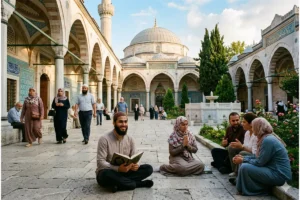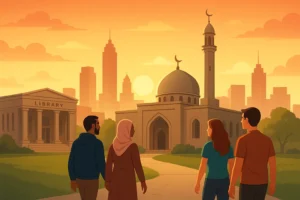

When people around the world search for “the religion of the Turks” or “Arab religion,” they often find themselves reading about Islam. It’s easy to see why. Turkish culture reflects kindness, hospitality, and faith. The Arab world is where Islam first appeared. So naturally, many people assume Islam belongs to these nations. But the truth is deeper and far more beautiful — Islam does not belong to any ethnicity or nationality. It belongs to all of humanity.
Where This Perception Comes From
Throughout history, Turks and Arabs have played enormous roles in preserving and spreading Islam. From the heart of the Arabian Peninsula to the empires of Anatolia, they carried the message of faith, justice, and mercy.
When non-Muslims see Turkish people offering help in disasters, or Arabs generously welcoming strangers, they often connect these noble behaviors directly with Islam — and they are right to some extent. These actions reflect the spirit of Islam. Yet it doesn’t mean Islam belongs to Turks or Arabs.
Islam didn’t start with any tribe, nor did it promise salvation to one nation. It began as a divine call to all people, in every language and culture, to turn toward the Creator with sincerity and peace.
Islam’s Message: For All Humanity
Islam’s message has never been bound by race, region, or language. The Qur’an speaks directly to all human beings, calling them brothers and sisters in creation.
“O mankind, indeed We have created you from male and female and made you peoples and tribes that you may know one another. Indeed, the most noble of you in the sight of Allah is the most righteous of you.”
Qur’an Reference: Surah Al-Hujurat, Verse 13
This verse alone shatters the idea that Islam belongs to Arabs, Turks, or any single nation. It reminds us that faith is not inherited through blood but embraced through belief.
Why People Associate Islam with Turks and Arabs
It’s understandable why people make this association. Turks, for centuries, ruled vast lands with justice through Islamic principles. The Ottoman Empire, for example, didn’t just spread borders — it spread mosques, schools, and mercy.
Meanwhile, the Arab world holds the holy cities of Mecca and Medina, making it the spiritual heart of Islam. Millions visit these lands every year, and naturally, outsiders begin to think Islam is “the Arab religion.”
But if you look closer, you’ll see Muslims in Africa, Europe, Asia, and the Americas — people of every color and language — all bowing in the same direction, reciting the same words, following the same peace.
“And We have not sent you, [O Muhammad], except as a mercy to the worlds.”
Qur’an Reference: Surah Al-Anbiya, Verse 107
This verse reminds us that Prophet Muhammad was sent not just for Arabs or Turks but for the worlds — all humanity, across every generation and nation.
The Beauty of Islam Beyond Borders
When people observe the warmth of Turkish families or the generosity of Arab neighbors, what they’re really witnessing is the reflection of Islamic values.
Islam teaches mercy, respect, and compassion. It encourages kindness to the poor, honesty in trade, and love for one’s neighbor — regardless of faith or background.
That’s why people often feel drawn to “the Turkish religion.” They’re not actually searching for a cultural belief; their hearts are being touched by the universal spirit of Islam.
“Indeed, the Muslim men and Muslim women, the believing men and believing women… Allah has prepared for them forgiveness and a great reward.”
Qur’an Reference: Surah Al-Ahzab, Verse 35
The Qur’an makes it clear — this reward is not tied to race, nationality, or gender. It is open to every believer who turns sincerely to God.
Islam is Not Ethnic — It’s Universal
The language of the Qur’an is Arabic, but its message is not Arab.
The devotion of the Turks is inspiring, but it doesn’t make Islam Turkish.
Islam stands above ethnicity, nationality, and culture — it speaks directly to the human soul.
If you travel to Indonesia, Nigeria, Bosnia, or America, you’ll see Muslims praying side by side — some dark-skinned, some fair, some speaking Arabic, some Turkish, some English. Yet their hearts beat with one rhythm: La ilaha illallah — there is no god but Allah.
A Gentle Invitation
If you’ve ever admired the kindness of Turkish people or the sincerity of Arab Muslims, take a moment to look beyond culture and language. What truly moves you is not a nation’s tradition but the light of Islam itself.
Islam calls every person — Arab, Turk, African, European, or anyone — to peace, humility, and connection with the Creator. It is a path for hearts, not passports.
You don’t have to be born into a specific culture to embrace it. You just have to be sincere enough to seek the truth.
“Whoever submits his face to Allah while being a doer of good will have his reward with his Lord.”
Qur’an Reference: Surah Al-Baqarah, Verse 112
In truth, Islam is not the religion of Turks or Arabs — it is the faith of every heart that seeks peace with its Creator.